
Runner’s knee, medically known as patellofemoral pain syndrome, is a dull ache around or behind the kneecap, often worse on stairs or after sitting. It’s commonly linked to weak hips and glutes or a rapid increase in mileage. Targeted strength exercises usually help, while sharp, swollen, or locking knee pain warrants professional assessment.
Three things a beginner can do this week:
- Reduce running volume or take rest days as soon as kneecap pain shows up, rather than running through it.
- Start a short hip and quad strengthening routine, such as clamshells and wall sits, on non-running days.
- Check recent mileage increases against a gradual progression rather than a sudden jump.
What is a runner’s knee?
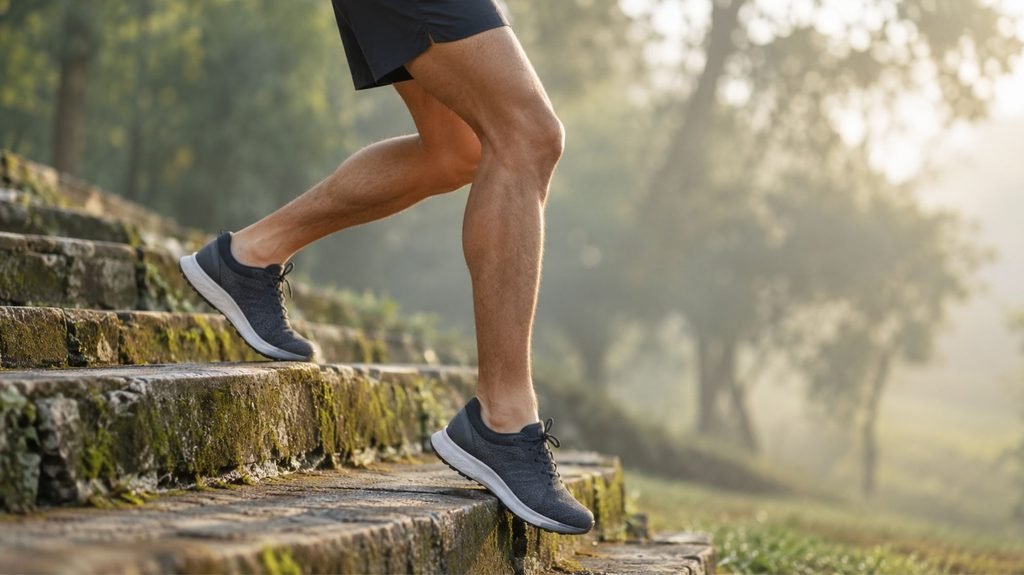
Runner’s knee, medically known as patellofemoral pain syndrome, is pain at the front of the knee, around or behind the kneecap, that often develops when the muscles supporting the knee don’t keep the kneecap tracking smoothly as it moves.
A few things to know in plain terms:
- The pain is typically felt at the front of the knee, around or just behind the kneecap itself.
- It’s called runner’s knee because it’s common among runners, though it also affects cyclists, hikers, and other active people.
- It tends to build gradually rather than appear suddenly after one run.
- It’s different from general post-run knee soreness, which fades within a day or two rather than returning with stairs, squatting, or prolonged sitting.
For a broader look at the injuries that tend to affect new runners, see the guide to common running injuries for beginners.
What causes a runner’s knee in new runners?
Runner’s knee usually develops when weak hip and glute muscles let the kneecap drift out of its normal tracking path, often made worse by a mileage increase the knee isn’t ready for yet.
- Weak hips and glutes. When these muscles aren’t strong enough to control the leg during each stride, the kneecap can shift out of alignment slightly with every step, which adds up over many miles.
- Overuse or a rapid mileage increase. Running more often or farther than the knee has adapted to is one of the most common triggers in new runners.
- Poor kneecap tracking. Movement patterns that let the knee drift inward, such as during a squat, have been linked to this kind of knee pain.
- Worn-out or poorly fitted shoes. Shoes that no longer cushion properly can add extra stress with every stride.
For guidance on building up running frequency without overloading the knees, see how often beginners should run.
How do you know it’s runner’s knee and not something more serious?
Runner’s knee typically causes a dull ache around or behind the kneecap that’s worse on stairs or after sitting, which is different from the sharper, more localized pain associated with a ligament or meniscus injury.
| Sign | Runner’s knee | Possible ligament or meniscus injury |
| Pain type | Dull, aching | Sharp, more localized |
| Common triggers | Stairs, squatting, prolonged sitting | May occur after a twist, pivot, or impact |
| Swelling | Usually mild or none | Often more noticeable |
| Stability | Knee feels stable | May feel like it catches, locks, or gives way |
| What to do | Strength work, gradual return | Seek professional assessment |
A quick safety reminder: sharp, swollen, or unstable knee pain is a signal to get it checked rather than self-manage. Self-diagnosis has limits, and a physical therapist or sports medicine physician can confirm what’s actually going on before it becomes a bigger setback.
What exercises help runner’s knee recover?
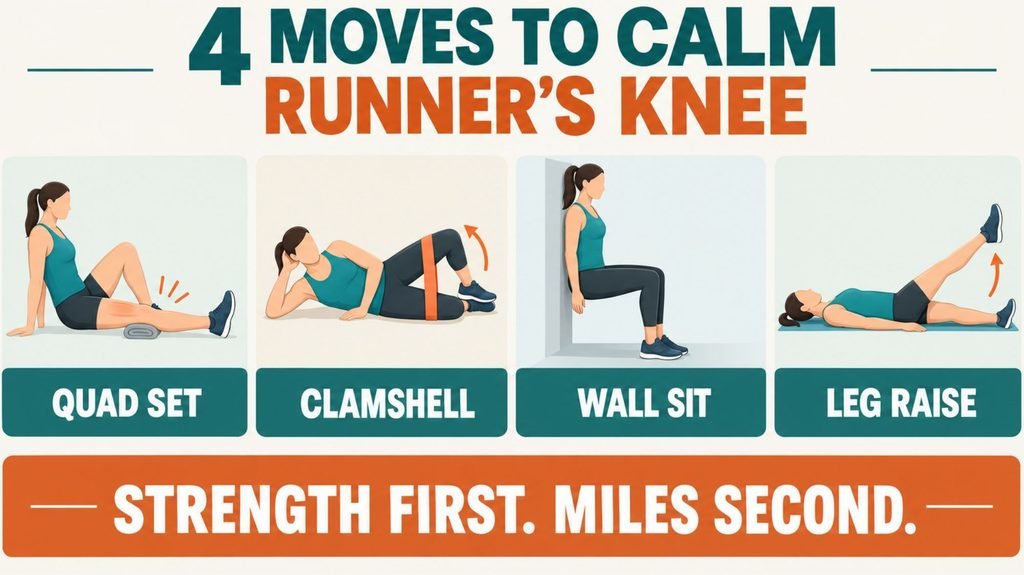
A short, consistent routine targeting the hips, glutes, and quads is one of the most commonly recommended approaches for easing a runner’s knee and addressing the muscle imbalances behind it.
- Quad sets. Sitting or lying with the leg straight, tighten the front thigh muscle and hold for a few seconds. This rebuilds quad strength without bending the joint, which makes it a gentle starting point.
- Clamshells. Lying on one side with knees bent, lift the top knee while keeping the feet together. This targets the hip muscles that help control kneecap alignment.
- The wall sits. Holding a seated position against a wall builds broader quad and hip endurance over time.
- Straight leg raises. Lying flat and lifting a straight leg a few inches works similar muscles without requiring a deep knee bend, which can be useful when bending feels uncomfortable.
Starting light and building consistency matters more than intensity early on. A resistance band set can add light resistance to clamshells and hip exercises once bodyweight versions start to feel easy, which helps because progressively loading the hip muscles is part of what rebuilds the strength behind proper kneecap tracking.
Do knee sleeves and KT tape actually help?
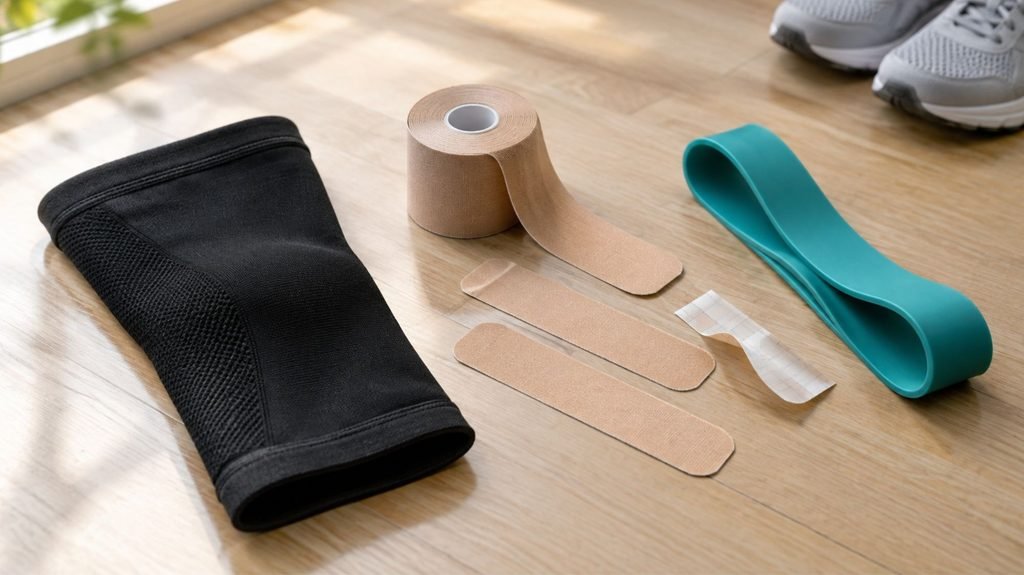
Knee sleeves and KT tape can ease discomfort for some runners, but neither fixes the underlying muscle imbalance that usually causes a runner’s knee in the first place.
A knee compression sleeve, built specifically with runner’s knee in mind, may offer mild compression and a sense of support during activity, which helps because some runners find that added support makes it more comfortable to stay consistent with the exercises above while recovering. KT tape works similarly for some runners, offering temporary symptom relief during a run or workout.
Neither product addresses the strength and tracking issues behind the pain, and the research on kinesiology tape specifically is limited, with reviews finding thin evidence that it outperforms other types of elastic taping. The honest takeaway: treat a sleeve or tape as a possible short-term comfort aid alongside strength work, not a substitute for it.
How can a beginner prevent a runner’s knee going forward?
Preventing a runner’s knee comes down to the same two things that help it recover: steady hip and glute strength work, and a mileage progression that gives the knee time to adapt.
- Keep up strength work even after symptoms resolve, not just during flare-ups.
- Progress mileage gradually rather than in sudden jumps.
- Pay attention to shoe fit, and replace worn-out shoes before they stop cushioning properly.
- Address pain early rather than running through it repeatedly.
Once symptoms have settled and a consistent strength routine is in place, the Couch to 5K plan offers a gradual, week-by-week way to rebuild running volume without rushing the process.
Starting point for managing runner’s knee: a quick checklist
- Reduce or pause running as soon as kneecap pain is noticed.
- Begin a short hip and quad strengthening routine on non-running days.
- Review recent mileage increases for a likely trigger.
- Check shoe age and fit.
- Note whether the knee swells, locks, or feels unstable, since that changes the next step.
In short
Runner’s knee usually traces back to how the hip and knee muscles are managing load, rather than one single injury or a single bad run. A short, consistent strength routine targeting the hips, glutes, and quads is the most evidence-backed fix, and it works whether the goal is recovering from a current flare-up or preventing the next one. Knee sleeves and KT tape can ease symptoms along the way, but they don’t replace that strength work. Persistent pain, swelling, or a knee that feels unstable is the signal to get a professional assessment rather than keep managing it alone.
Want to keep running without constantly working around knee pain? Explore No Injury Running for practical guidance on building strength, managing training load, and staying on the road with fewer setbacks.
Frequently Asked Questions
Recovery time varies by person, but many runners notice improvement within a few weeks of consistent rest, reduced mileage, and targeted strength work, with full recovery sometimes taking longer depending on severity.
Reducing or pausing running as soon as kneecap pain appears is generally the safer approach, since continuing to run on it tends to delay recovery. Light, pain-free activity is usually fine, but mileage should wait until symptoms ease.
A knee sleeve may offer mild compression and a sense of support during activity, which some runners find helpful, but it doesn’t address the underlying muscle imbalance behind the pain on its own.
KT tape may offer temporary symptom relief for some runners, though the research evidence behind it is limited. It’s best treated as a possible short-term aid alongside strength work, not a replacement for it.
A runner’s knee usually causes a dull ache that’s worse on stairs or after sitting, while a ligament or meniscus injury tends to cause sharper, more localized pain, often with swelling or a feeling of instability. A professional assessment is the safest way to tell the two apart.