
Plantar fasciitis causes stabbing heel pain, often worst with the first steps in the morning, from strain on the tissue connecting the heel to the toes. Supportive shoes, calf and foot stretches, and reduced high-impact activity typically help. Persistent pain despite several weeks of consistent self-care may warrant professional assessment.
Three things a beginner can do this week:
- Check running shoes for worn-out cushioning or inadequate arch support, and replace them if needed.
- Add a short calf and plantar fascia stretch routine first thing in the morning, before standing.
- Reduce high-impact running volume temporarily if heel pain is present, rather than running through it.
What is plantar fasciitis, and why does it affect runners?
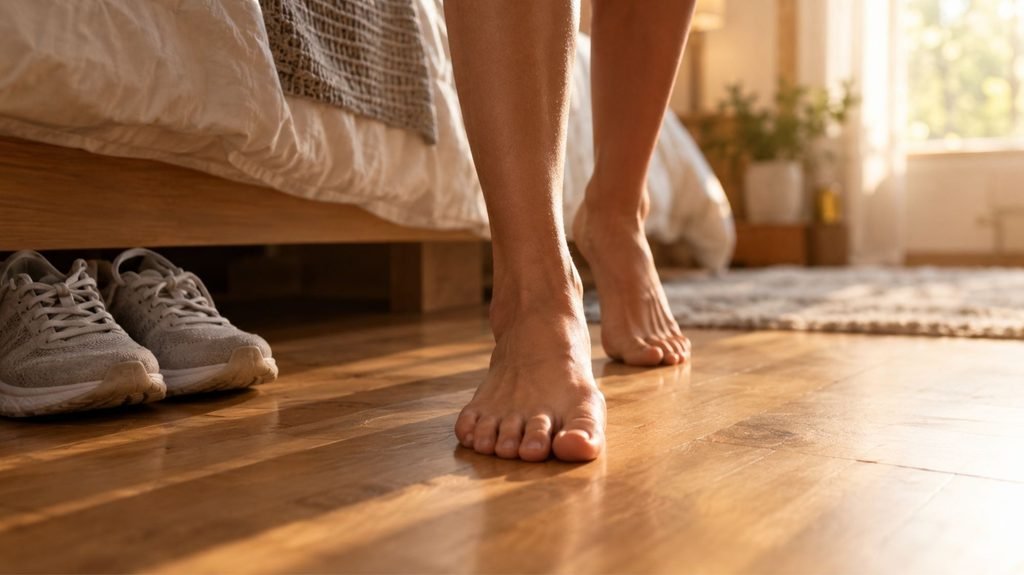
Plantar fasciitis is irritation of the plantar fascia, a thick band of tissue connecting the heel bone to the toes, and it’s one of the most common causes of heel pain among runners.
A few things to know in plain terms:
- The pain is typically felt on the bottom of the foot, near the heel.
- Repeated impact from running places repeated strain on this tissue, which can lead to irritation over time.
- A distinctive marker is pain that’s worse with the first steps in the morning, often easing somewhat as the foot warms up and then returning after long periods of standing or activity.
- It’s different from general foot fatigue, which tends to fade with rest rather than reappear predictably each morning.
What causes plantar fasciitis in runners?
Plantar fasciitis usually develops from a combination of repeated strain on the foot, worn-out or unsupportive shoes, and foot shape or training factors that add extra stress to the plantar fascia.
- Worn-out or poorly cushioned running shoes. Shoes that have lost their support no longer absorb impact the way they’re designed to, which shifts extra strain onto the plantar fascia.
- High-impact activities. Long-distance running places repeated stress on the heel with every stride, which is part of why plantar fasciitis is common among runners specifically.
- Foot shape. Flat feet or high arches can both change how weight is distributed across the foot, adding strain in different ways.
- Sudden increases in running volume or surface changes. Ramping up mileage quickly, or switching surfaces without easing in, gives the plantar fascia less time to adapt.
What shoe features actually help with plantar fasciitis?
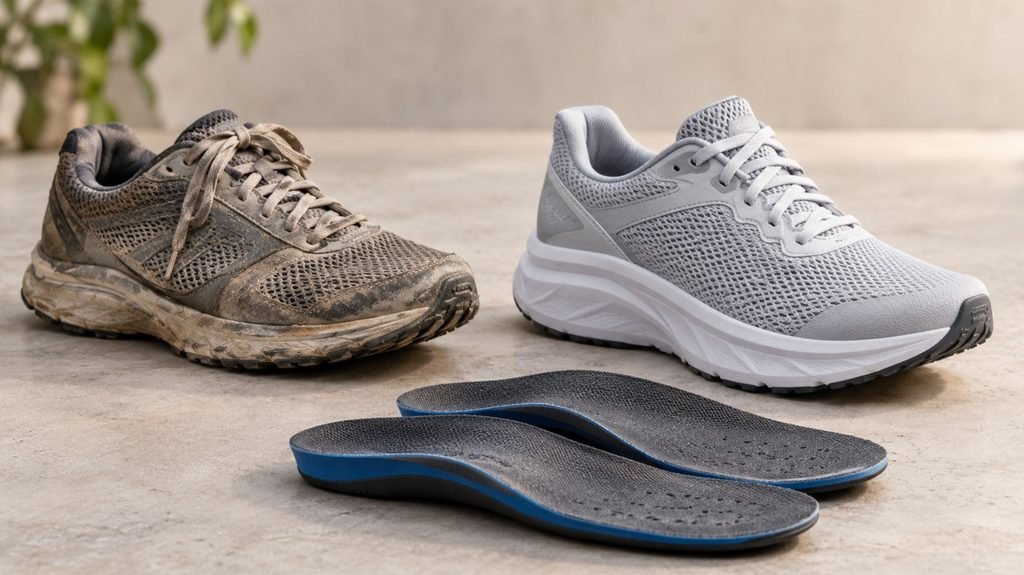
Shoes that offer firm arch support, adequate heel cushioning, and a moderate heel-to-toe drop are commonly recommended for reducing strain on the plantar fascia during running.
- Arch support that matches foot shape. A shoe with the right arch support for flat feet, high arches, or a neutral arch helps distribute pressure more evenly than a one-size-fits-all sole.
- Cushioned heel. Adequate padding under the heel helps absorb impact with each stride, which matters since heel strike is often where plantar fasciitis pain is felt most.
- A moderate heel-to-toe drop. This can ease some of the strain on the fascia compared to very minimal or unsupportive designs, especially for someone currently dealing with symptoms.
- Shoe age. Cushioning breaks down with mileage even when a shoe still looks fine, so it’s worth replacing shoes based on wear rather than appearance.
If existing shoes are otherwise comfortable but short on arch support, supportive arch-support insoles are a reasonable way to add structure without replacing the shoes entirely, which helps because added arch support inside existing footwear is a commonly recommended way to reduce plantar fascia strain. For a broader look at choosing running shoes as a beginner, see the best running shoes for beginners guide.
What stretches help plantar fasciitis the most?
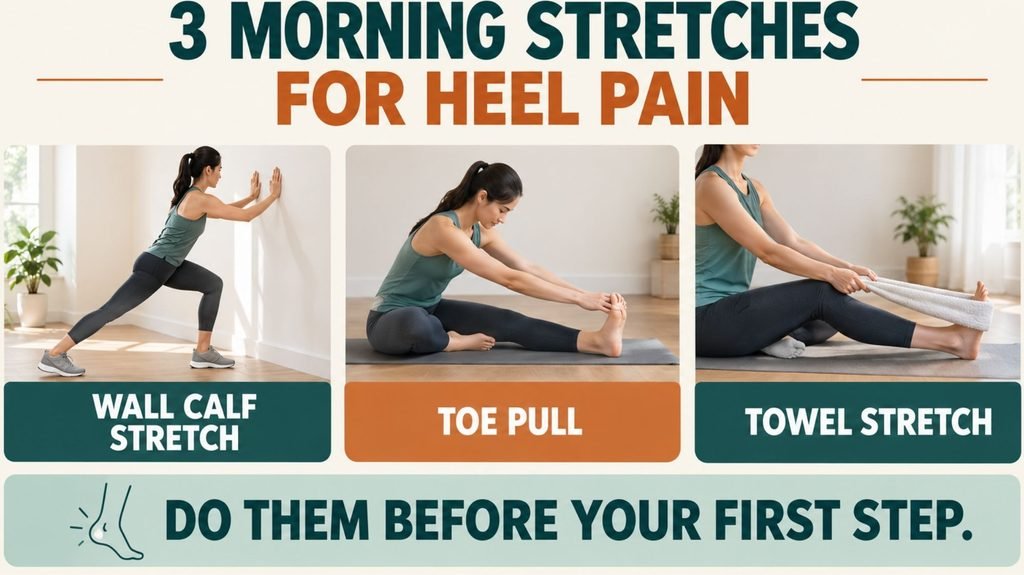
A short calf and plantar fascia stretch routine, especially first thing in the morning before standing, is one of the most consistently recommended approaches for easing plantar fasciitis pain.
- Calf stretches against a wall. Hold both a straight-knee and a bent-knee version, since tightness higher up the leg can affect how much strain reaches the foot.
- Seated plantar fascia stretch. While seated, gently pull the toes back toward the shin and hold for a short count.
- Towel stretch. Loop a towel around the ball of the foot while seated and gently pull back, which stretches the arch and calf together.
- Rolling the arch. Gently rolling the arch of the foot over a firm, rounded object can offer a mild self-massage effect alongside the stretches above. A foot massage ball is designed for this kind of targeted rolling, which helps because it lets a beginner apply gentle, controlled pressure to the arch rather than improvising with whatever’s on hand.
Doing this routine before the first steps of the day, rather than only after a run, is when it tends to matter most, given how closely plantar fasciitis pain tracks with that first-steps-in-the-morning pattern.
What helps plantar fasciitis recover, and when should a beginner rest versus modify training?
Most plantar fasciitis improves with consistent conservative care, including supportive shoes, stretching, and reduced high-impact activity, while pushing through pain tends to prolong recovery.
- Reducing running volume or switching to lower-impact cross-training, such as cycling or swimming, temporarily while symptoms settle.
- Staying consistent with stretching, especially the morning routine above, rather than doing it occasionally.
- Checking and upgrading footwear or insoles as needed, since worn-out support is a common contributing factor.
- Returning to running gradually once morning pain has eased, rather than resuming full mileage right away.
A quick safety reminder: pain that persists despite several weeks of consistent self-care, or that occurs during walking or at rest rather than just after activity, deserves a professional assessment rather than continued self-management. A physical therapist or podiatrist can confirm what’s going on and build a plan suited to the specific cause.
Morning plantar fasciitis routine: a quick checklist
- Calf stretches against a wall, both knee positions, before standing.
- Seated plantar fascia stretch, pulling toes gently toward the shin.
- Towel stretch for the arch and calf.
- Check shoe support before the day’s first steps.
- Note whether pain eases through the day or persists, since that changes the next step.
The Final Thought
Plantar fasciitis traces back to repeated strain on the band of tissue connecting the heel to the toes, and for runners that strain usually builds from a combination of footwear, training load, and foot shape. Supportive shoes with real arch support and heel cushioning, paired with a short daily stretch routine done first thing in the morning, address much of what causes and worsens it. Reducing high-impact running temporarily while symptoms are present gives the tissue room to settle. Heel pain that doesn’t improve after several weeks of consistent self-care, or that shows up during ordinary walking, is the signal to get a professional opinion rather than keep managing it alone.
If heel pain keeps getting in the way of your runs, No Injury Running can help you understand what to change before it becomes another reason to stop. Explore practical guidance on training smarter, managing load, and building a running routine you can actually stick with. If pain doesn’t improve after several weeks of consistent self-care, or appears during ordinary walking, get a professional opinion rather than continuing to manage it alone.
Frequently Asked Questions
It’s usually caused by a combination of repeated impact from running, worn-out or unsupportive shoes, and foot shape factors like flat feet or high arches that add extra strain to the plantar fascia.
Firm arch support matched to foot shape, adequate heel cushioning, and a moderate heel-to-toe drop are commonly recommended features, along with replacing shoes once their cushioning has worn down.
Recovery time varies by person, but many cases improve over several weeks with consistent supportive footwear, stretching, and reduced high-impact activity.
Reducing mileage or switching to lower-impact cross-training temporarily is often enough for mild symptoms, but persistent pain is a signal to scale back further and consider a professional assessment.
A morning routine combining a calf stretch, a seated plantar fascia stretch, and a towel stretch is commonly recommended, done before the first steps of the day rather than only after running.
Supportive insoles can add arch support to existing shoes, which may help reduce strain on the plantar fascia, though they work best alongside stretching and proper footwear rather than as a stand-alone fix.
This article is educational and is not medical advice. It does not diagnose or treat any condition. Stop running and seek prompt medical care for sudden severe pain, visible swelling, numbness or tingling, pain following a fall or twist, or any pain that persists or worsens despite rest.