Quick answer: The right running shoes for a beginner come down to two things: enough cushioning to absorb repeated impact, and the right amount of gait support for how the foot actually moves. A simple wet-foot test at home, combined with checking the wear pattern on an old pair of shoes, is usually enough to narrow the choice down to one of a few solid categories.
- Cushioning and gait support matter more to injury prevention than brand name or looks
- A wet-foot test at home gives a rough but useful read on arch type before shopping
- Checking the wear pattern on an old pair of shoes tells a similar story about gait
- Running shoes generally need replacing every 350–500 miles, sooner for heavier runners or more frequent training
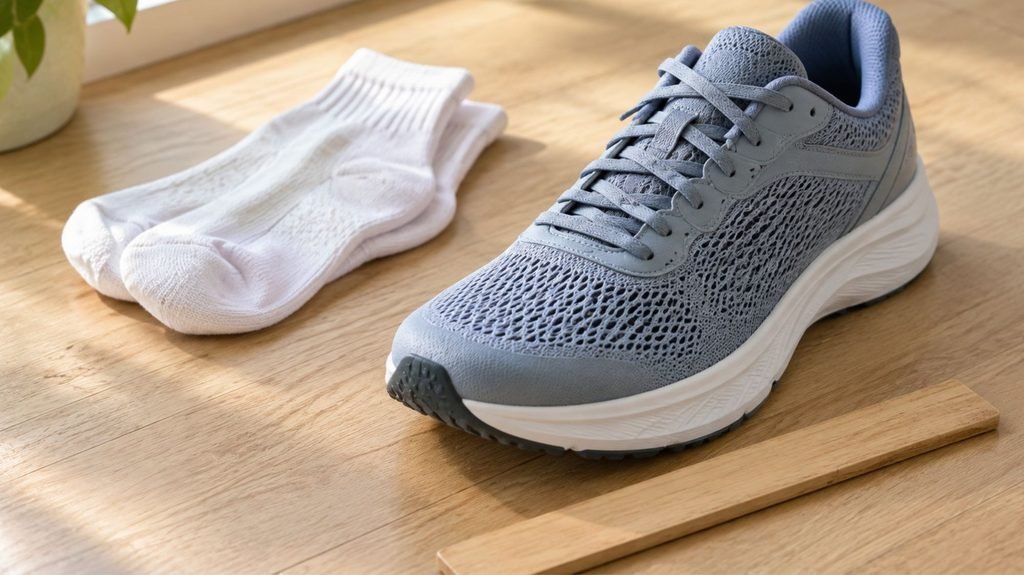
- A thumb’s width of space in the toe box and sizing up half a size from an everyday shoe size covers most first-time fit mistakes
Why the Right Shoes Matter for Injury Prevention
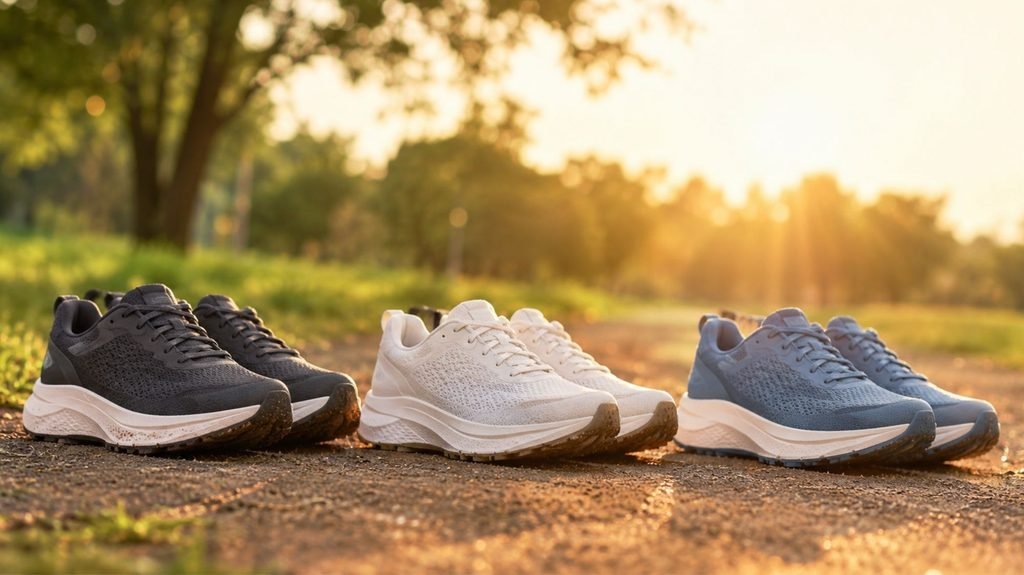
Running puts several times body weight through the foot and lower leg with every step, over and over, for the length of a run. Two properties of a shoe determine how well it handles that load: cushioning and gait support.
Cushioning and impact absorption determine how much of that repeated impact gets soaked up by the shoe rather than passed up through the shin, knee, and hip. According to the American Podiatric Medical Association, neglecting proper running footwear can lead to a range of foot problems that cause injury and hurt performance, and shoe choice should factor in shock absorption from the outset.
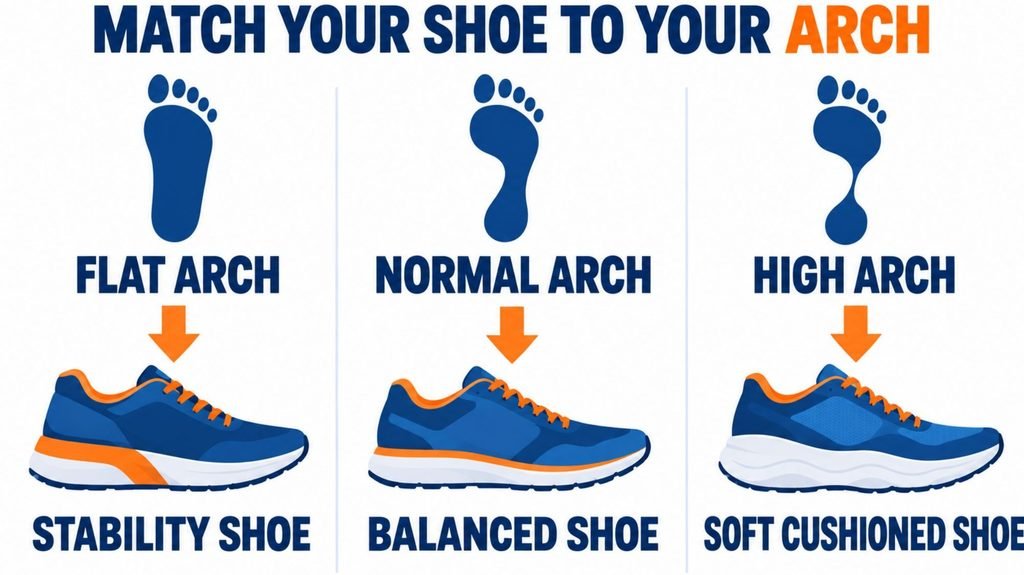
Support for gait patterns matters just as much as cushioning. The way a foot rolls inward after landing, called pronation, varies from person to person, and a shoe built for the wrong pattern can leave the foot doing more stabilizing work than it should. The APMA groups this into three broad categories: low/flat arches typically pair best with a supportive, motion-control shoe; normal arches do well with a balance of stability and cushioning; and high arches usually benefit from a softer, more flexible midsole to compensate for naturally poor shock absorption. Worn-out shoes lose this support gradually, which is part of why Mayo Clinic lists poorly fitting or worn footwear as a contributing factor in shin splints, one of the most common injuries among new runners.
How to Find Your Foot Type and Gait
Buying shoes without knowing arch type is a bit like buying prescription glasses off a shelf, it might work, but it’s a guess. Two simple checks narrow that guess down considerably.
The wet-foot test: wet the sole of one foot, step onto a piece of cardboard or a paper bag, and look at the print left behind. According to Mayo Clinic Health System, if roughly half the arch shows in the print, that indicates a normal arch that naturally supports body weight and pronates moderately under load. A print that shows almost the entire foot, with little to no curve on the inner edge, points to a flat or low arch, which tends toward overpronation. A print that shows mostly the heel and ball, with a thin or missing connection between them, indicates a high arch, which often under-pronates and needs more built-in cushioning instead of correction.
The worn-shoe-tread test: an existing pair of shoes, running or everyday, tells a similar story. Uneven wear concentrated on the inner edge of the sole usually points toward overpronation; wear concentrated on the outer edge points toward under-pronation (also called supination); fairly even wear across the sole generally lines up with a neutral gait. This is a rough read, not a diagnosis, but combined with the wet test it’s usually enough for a first pair.
Top Picks by Category
None of the picks below need to be treated as the one correct answer, they’re a sound, well-reviewed starting point for each situation, and trying a pair on, with the socks actually worn for running, still matters more than any spec sheet.
| Category | Pick | Best For | Notes |
| Neutral cushioned | ASICS Gel-Cumulus 27 | Neutral or mildly pronating gait, general beginner use | Balanced cushioning that’s stable without being a dedicated stability shoe, a common first recommendation for runners who don’t yet know their gait |
| Stability / overpronation | ASICS Gel-Kayano 31 or Brooks Adrenaline GTS 25 | Flat/low arches, moderate-to-noticeable overpronation | Built-in arch guidance and a firmer midsole edge to limit inward roll; heavier than neutral shoes, which is expected |
| Wide toe box | HOKA Clifton 10 | Wide feet, bunions, or anyone who finds standard toe boxes cramped | Roomy, seamless mesh upper reduces pressure on the toes; well cushioned without feeling heavy |
| Budget | Saucony Ride 18 or Saucony Cohesion 13 | New runners who want a solid shoe without a premium price tag | Delivers cushioned, reliable performance considerably below the price of the premium picks above |
How Often to Replace Running Shoes
Cushioning breaks down gradually and quietly, long before a shoe looks obviously worn out, it may already be doing a noticeably worse job absorbing impact. Mayo Clinic Health System both point to roughly 350–500 miles as a reasonable replacement window for runners, while the APMA’s general guidance for regular runners lands closer to every six to eight months for someone running a few times a week. For a beginner logging lower weekly mileage, time in use is often the more practical marker to track than miles alone, a phone note with the purchase date is enough. Persistent new aches in the shins, knees, or feet that show up without any other change in training are also a signal worth checking against shoe age, not just training load.
Fit Tips
What actually matters for fit, beyond size?
There should be roughly a thumb’s width of space between the longest toe and the front of the shoe. Toes that touch the front during a run, which happens naturally as feet swell slightly with activity, are a common, avoidable cause of black toenails and general foot pain.
Many first-time buyers wear their regular street-shoe size in running shoes and end up with a fit that’s too tight once feet swell mid-run. Going up half a size from an everyday shoe size is a common and reasonable starting adjustment, then confirmed by the toe box check above and a short test run if the store allows it.
Common Mistakes Beginners Make
- Buying by brand or looks instead of fit. A shoe that looks great on a running influencer can still be the wrong category for a given foot type.
- Skipping the wet test and just guessing. A two-minute check at home beats an expensive guess at checkout.
- Ignoring an old pair’s wear pattern. It’s free evidence about gait that’s already sitting in a closet.
- Wearing the same size as an everyday shoe. Feet swell during a run; a snug everyday fit often becomes a too-tight running fit.
- Holding onto shoes well past 500 miles because they still look fine. Cushioning degrades before the upper shows visible wear.
Conclusion
None of this needs to turn into an afternoon of research before a first run happens. Two checks, the wet-foot test and a look at how an old pair of shoes has worn down, narrow the field from hundreds of options to one of a few clear categories, and the picks above give a solid, well-reviewed starting point in each one. Cushioning and gait support matter more to injury prevention than brand, color, or how fast a shoe looks on the shelf, and a thumb’s width of toe room plus sizing up half a size covers most of what trips up first-time buyers.
For a broader first-week plan to pair with a new pair of shoes, How to Start Running as a Beginner covers the run-walk method and a sample first-week schedule.
Frequently Asked Questions
1. How do I know if my running shoes don’t fit right?
Common signs include toes touching the front of the shoe, heel slipping during the stride, numbness or tingling in the toes, or new hot spots and blisters in the same location every run. Persistent pain in the same spot after switching shoes is also worth paying attention to.
2. Can the wrong shoes cause shin splints?
Yes, footwear that lacks adequate support or has broken down from wear is one of several contributing factors Mayo Clinic lists for shin splints, alongside training load increases and running surface. Proper footwear is also part of the standard advice for preventing shin splints from recurring.
3. Do beginners need expensive running shoes?
No. A higher price doesn’t automatically mean a better fit for a given foot, and the budget picks above are meant for exactly this situation. What matters most is the right category for the individual foot type, enough cushioning, and a comfortable fit, so it’s worth trying on a few pairs before deciding on price.
4. Is a professional gait analysis worth getting before buying?
It’s optional for most beginners. The wet-foot test and a look at an old pair’s wear pattern are usually enough to choose a sensible first pair. A gait analysis at a specialty running store, or an appointment with a podiatrist, can be more useful for anyone with noticeable overpronation, a history of foot or lower-leg injury, or pain that keeps returning.
5. Can I start running in the sneakers or gym shoes I already own?
Everyday sneakers and gym shoes aren’t designed around the repeated forward impact of running, and they may be worn out or poorly cushioned without looking at it. Checking the wear pattern and cushioning on an existing pair is a reasonable first step, but if they’re old or uncomfortable on a short test run, a proper pair of running shoes is a worthwhile purchase before increasing distance.

One Response