
IT band syndrome causes pain on the outside of the knee from friction where the iliotibial band crosses the knee joint, usually worsened by weak hip muscles and a sudden mileage increase. Rest, reduced mileage, and hip and glute strengthening typically help most. Pain that persists despite rest may warrant professional assessment.
Three things a beginner can do this week:
- Reduce running volume or switch to flat, even surfaces as soon as outer knee pain appears.
- Add a short hip abductor and glute strengthening routine on non-running days.
- Check recent mileage increases and running surfaces for a likely trigger.
What is IT band syndrome, and why do runners get it?

IT band syndrome is pain on the outside of the knee caused by friction and irritation where the iliotibial band, a thick band of tissue running from the hip to the knee, crosses the outer edge of the knee joint with each stride.
A few things to know in plain terms:
- Repetitive bending and straightening of the knee during running can irritate this area over time.
- It’s common in runners specifically, and also affects cyclists and hikers.
- Unlike some overuse injuries, it affects both new and experienced runners, not just beginners ramping up too fast.
- The pain tends to build gradually with distance rather than appear suddenly.
What are the symptoms of IT band syndrome?
The main symptom is pain on the outside of the knee that builds during a run, sometimes described as sharp or burning, and it can extend to the outer hip or thigh.
- Pain typically starts after a consistent distance into a run and builds from there, rather than hurting from the first step.
- The pain is concentrated on the outer knee, not the front of the knee.
- This is one way it differs from runner’s knee, which causes a dull ache at the front of the knee instead.
- Over time, if ignored, the distance it takes for pain to appear tends to get shorter.
A quick safety reminder: pain that persists during walking or at rest, or that comes with noticeable swelling, deserves a professional look rather than continued self-management.
What causes IT band syndrome in runners?

IT band syndrome usually develops from a combination of weak hip muscles, which let the leg move in ways that increase friction at the knee, and training changes like a sudden mileage increase or a new running surface.
- Weak hip abductor and glute muscles. These muscles help control leg movement during each stride, and when they’re underpowered, the mechanics that irritate the IT band tend to increase.
- Sudden increases in weekly mileage. Adding distance faster than the body has adapted to is a common trigger.
- Running on banked or uneven surfaces. Road shoulders and cambered paths change the angle of each stride in a way that can add stress to the outer knee.
- Worn-out running shoes. Shoes that no longer offer proper support can contribute to the same mechanical issues.
What stretches and foam rolling actually help?
A short, focused stretching and foam rolling routine can ease tightness in the muscles around the IT band, though it works best alongside strength work rather than as a stand-alone fix.
- Standing IT band stretch. Cross one leg behind the other and lean away from the back leg, holding for a short count on each side.
- Foam rolling the outer thigh. A foam roller can be used to roll slowly along the outer thigh, which helps because working the surrounding muscles gently, rather than digging aggressively into the most painful spot, tends to be more comfortable and just as useful.
- Hip flexor and glute stretches. Loosening these surrounding muscles can help address some of the tightness that contributes to IT band irritation.
Worth knowing honestly: the IT band itself is dense connective tissue and doesn’t lengthen much from stretching alone. This routine supports recovery and comfort, but it isn’t a replacement for the strength work below.
What strength exercises help prevent IT band syndrome from coming back?
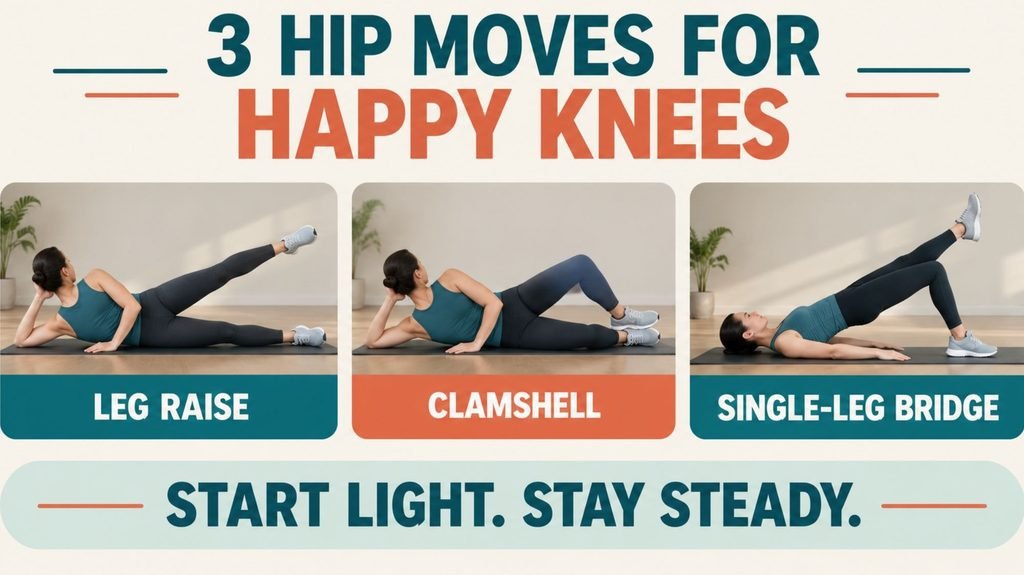
Hip abductor and glute strengthening is one of the most consistently recommended approaches for addressing the muscle weakness behind IT band syndrome and reducing the chance it returns.
- Side-lying leg raises. Lying on one side, lift the top leg slowly with the knee straight to build hip abductor strength directly.
- Clamshells. Lying on one side with knees bent, lift the top knee while keeping the feet together to activate the glutes.
- Single-leg bridges. Lying on the back with one foot planted, lift the hips using that single leg to build glute and hip endurance.
A resistance band set can add light resistance to leg raises and clamshells once the bodyweight versions start to feel easy, which helps because gradually increasing the load on these muscles is part of what rebuilds the hip strength this routine is aiming for. Starting light and building consistency matters more than intensity early on.
When should a beginner rest versus modify training?
Mild IT band pain that eases quickly after a run can often be managed by reducing mileage or switching to flatter surfaces, while pain that persists or worsens calls for a full break from running.
- For mild, early symptoms, reducing mileage or intensity is a reasonable first step.
- Switching to flat, even surfaces rather than banked roads or cambered trails can ease the mechanical stress on the outer knee.
- If pain persists despite these changes, or returns quickly once running resumes, full rest and a professional assessment are the safer next step.
- What to avoid: running through sharp or worsening outer knee pain in hopes that it will work itself out.
Managing early IT band pain: a quick checklist
- Reduce or pause running as soon as outer knee pain is noticed.
- Switch to flat, even surfaces where possible.
- Begin a short hip abductor and glute strengthening routine.
- Check shoe age and support.
- Note whether pain persists during walking, since that changes the next step.
The Conclusion
IT band syndrome traces back to friction at the outer knee, usually made worse by weak hips and a mileage jump the band and surrounding tissue haven’t adapted to yet. Stretching and foam rolling can ease some of the surrounding tightness, but hip and glute strength work tends to matter more for addressing the cause directly. Reducing mileage, switching to flatter surfaces, and staying consistent with strength exercises handle most mild cases. Pain that doesn’t ease with rest and reduced mileage, or that shows up during walking, is the signal to get a professional opinion rather than keep pushing through it.
If you’re ready to build a stronger, more sustainable running routine instead of constantly reacting to pain, No Injury Running offers practical guidance to help you train smarter, manage your load, and keep moving forward. And if pain persists despite rest and reduced mileage, or starts showing up while walking, get a professional assessment before returning to harder training.
Frequently Asked Questions
It’s usually caused by a combination of weak hip and glute muscles and training changes, such as a sudden mileage increase or running on banked or uneven surfaces, that increase friction where the IT band crosses the outer knee.
Foam rolling can ease tightness in the muscles around the IT band and may offer some comfort, but it works best alongside hip and glute strength work rather than as a stand-alone fix for the underlying cause.
Recovery time varies, but many runners see improvement within several weeks with consistent rest, reduced mileage, and a hip and glute strengthening routine, depending on severity.
Reducing mileage or switching to flat, even surfaces is often enough for mild symptoms, but persistent or worsening pain is a signal to take a full break from running and seek a professional assessment.
This article is educational and is not medical advice. It does not diagnose or treat any condition. Stop running and seek prompt medical care for sudden severe pain, visible swelling, numbness or tingling, pain following a fall or twist, or any pain that persists or worsens despite rest.