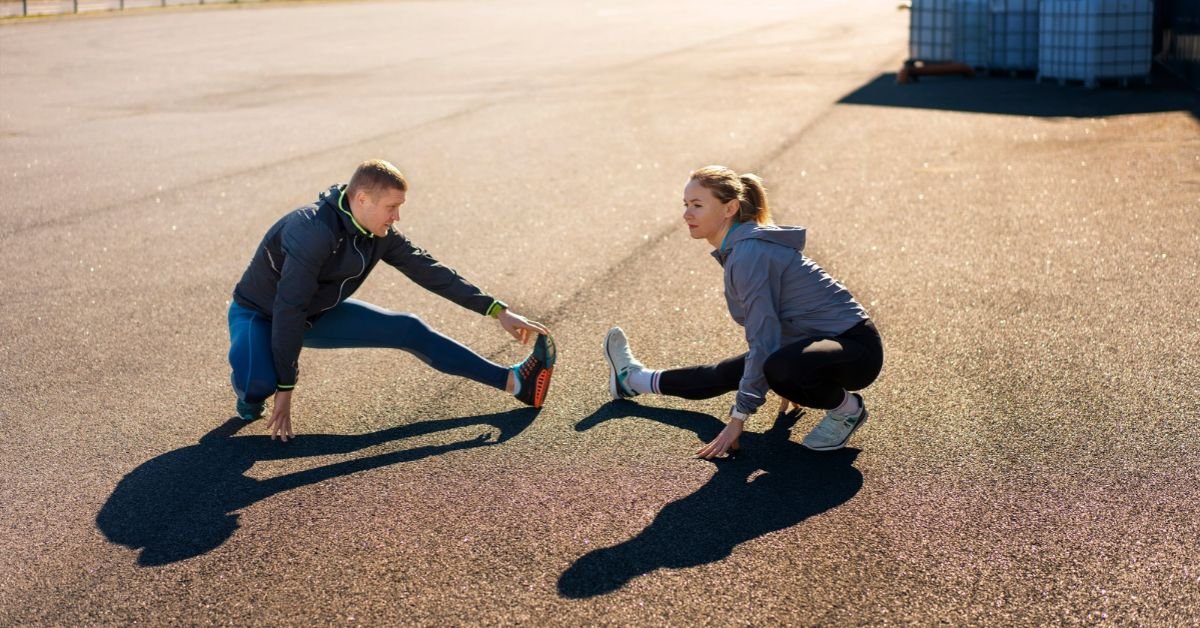
A side stitch, medically known as exercise-related transient abdominal pain, affects up to around 70 percent of runners at some point, often linked to eating too close to a run, shallow breathing, or starting too fast. Slowing down, deep breathing, and gentle pressure on the area often help. Pain that doesn’t ease with rest deserves a closer look.
Three things a beginner can do this week:
- Leave at least a couple of hours between a full meal and a run, since eating close to exercise is one of the most consistently linked triggers.
- Start runs at an easy, conversational pace rather than going out fast, since starting too quickly is a commonly reported trigger.
- Practice slow, deep belly breathing during easy runs so it feels natural to switch to if a stitch appears.
What is a side stitch, exactly?

A side stitch, medically known as exercise-related transient abdominal pain, is a sharp or cramping pain usually felt along the lower edge of the ribs, most often on the right side.
A few things to know:
- The pain typically sits along the lower rib area, though it can occur on either side.
- Unlike a true injury, it tends to fade once pace slows or activity stops, usually within a few minutes.
- Researchers haven’t settled on one single cause, though several contributing factors show up consistently across studies.
- It’s rarely dangerous on its own, but understanding the pattern helps tell a typical stitch apart from something that needs attention.
How common are side stitches among runners?
Research suggests a side stitch is genuinely common, with studies reporting that up to around 70 percent of runners experience one at some point over a year, and roughly 1 in 4 runners reporting one during a single race.
A study of 848 distance runners during a single event found that 27 percent experienced a stitch, with pain reported more often on the right side. Comparative research has also found runners report this kind of pain considerably more often than walkers do during similar exertion. Experience seems to matter too: survey research has found that more experienced and older runners tend to report fewer stitches than newer or younger runners, even though training status doesn’t fully rule out the risk.
For context on how this fits into a beginner’s broader running journey, see the guide to starting running as a beginner.
What causes a side stitch when running?
A side stitch is most consistently linked to eating too close to a run, shallow or uneven breathing, and starting a run faster than the body has warmed up for, though researchers haven’t settled on one single mechanism.
- Eating or drinking close to a run. This is one of the more consistently cited triggers across ETAP research, especially with a large meal shortly before exercise.
- Shallow, chest-focused breathing. Breathing that stays high in the chest rather than engaging the diaphragm more fully is commonly linked to stitches.
- Starting too fast. Going out at a hard pace before the body has eased into the effort is a frequently reported trigger, particularly among newer runners.
- Weaker core and trunk conditioning. Some research links lower trunk strength to a higher likelihood of experiencing stitches, though this isn’t the whole picture.
What actually helps once a stitch hits mid-run?
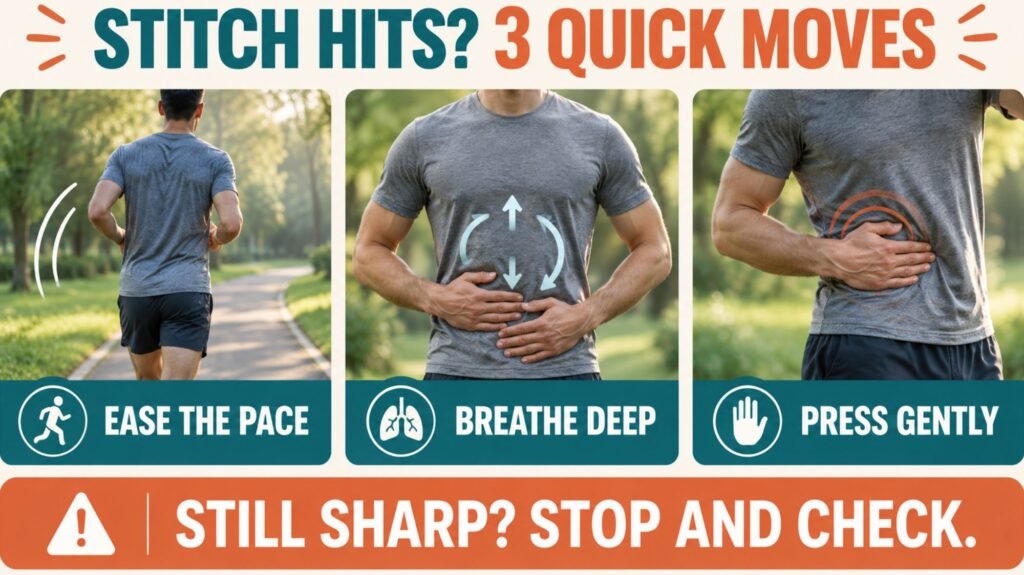
Slowing down, taking slow deep breaths, and gently pressing on the area are the most commonly tried in-the-moment responses, though it’s worth knowing upfront that none of them are proven to work every time.
- Ease the pace. Slowing down rather than pushing through at full speed is the most consistently reasonable first step.
- Switch to slow, deep belly breathing. Replacing shallow chest breathing with slower, deeper breaths is commonly recommended and lines up with how shallow breathing is linked to stitches in the first place.
- Gently press on the area. Applying light pressure with a hand while continuing to breathe deeply is a widely tried technique.
- The exhale-on-opposite-foot trick. This is repeated across running media as a near-guaranteed fix, but it’s worth being honest here: a recent evidence review found no strong controlled evidence that timing the exhale to a specific foot reliably stops a stitch. It’s a reasonable thing to try, just not a proven one.
A quick safety reminder: pain that doesn’t ease with these steps, or that feels different from a typical stitch, such as sharper, more localized, or paired with other symptoms, is a signal to stop and reassess rather than keep running.
How can a beginner reduce the chances of getting one?
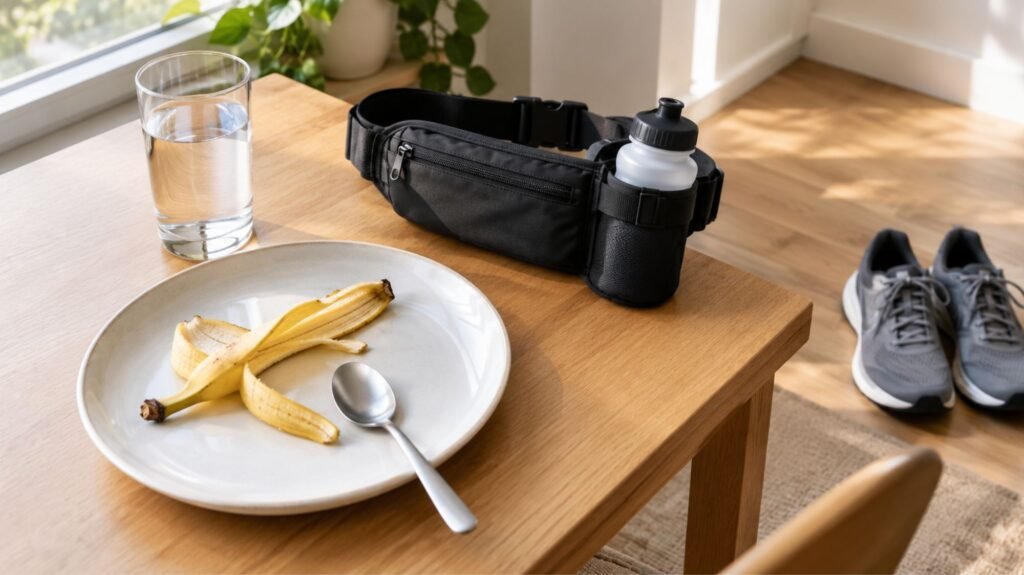
Spacing meals away from run times, warming up into an easy pace rather than starting fast, and building general core strength over time are the most consistently supported ways to reduce how often stitches show up.
- Leave a couple of hours between a full meal and a run where possible.
- Start every run at an easy, conversational pace rather than going out hard. A GPS running watch can help with this directly, since seeing real-time pace makes it easier to catch an overly fast start before it becomes a problem, which matters given how often starting too quickly shows up as a trigger.
- Build general core and trunk strength gradually as part of overall training.
- Pay attention to personal patterns, such as which foods or timing seem to trigger a stitch.
- For runs where water is needed along the way, a hydration belt allows sipping small amounts steadily during a run rather than drinking a large volume right before starting, which may help given how closely stitches are linked to fluid and food intake timing.
Proven versus commonly repeated side stitch advice
| Advice | What the research actually supports |
| Slowing the pace | Widely recommended and generally sensible, though not tested in strict controlled trials |
| Deep, slow belly breathing | Commonly recommended; plausible based on how shallow breathing is linked to stitches |
| Avoiding meals close to running | One of the more consistently supported triggers to avoid |
| Exhaling on the opposite foot | Commonly repeated as a fix, but a recent evidence review found no strong controlled evidence it reliably works |
| Fixed breathing ratios | Can help organize effort and pacing, but not proven to prevent or stop a stitch specifically |
The Conclusion
Side stitches are common, especially among newer runners, affecting a large share of people who run regularly at some point. Eating timing, pace, and breathing all appear to play a plausible role, even though no single fix is proven to work every time a stitch strikes. Starting easy, spacing out meals and fluids, and practicing deep breathing on ordinary runs are the most sensible places to focus. Pain that doesn’t ease with rest, or that feels different from a typical stitch, is the signal to stop and get it checked rather than push through.
Want fewer interruptions on your runs? Explore No Injury Running for practical tips on pacing, training habits, and staying comfortable as you build your running routine.
Frequently Asked Questions
Eating too close to a run, shallow chest breathing, and starting too fast are the most consistently cited triggers, though researchers haven’t identified one single mechanism behind it.
Research suggests up to around 70 percent of runners experience one at some point, with roughly 1 in 4 reporting one during a single race, based on survey and event-based studies.
It’s a commonly repeated technique, but a recent evidence review found no strong controlled evidence that timing the exhale to a specific foot reliably stops a stitch. It’s reasonable to try, just not a guaranteed fix.
Leaving a couple of hours between a full meal and a run is a commonly recommended spacing, since eating close to exercise is one of the more consistently linked triggers
A typical stitch is uncomfortable but not dangerous, and many runners ease off the pace rather than stop entirely. Pain that’s severe, doesn’t ease, or feels different from a usual stitch is a signal to stop and reassess.
This article is educational and is not medical advice. It does not diagnose or treat any condition. Stop running and seek prompt medical care for sudden severe pain, visible swelling, numbness or tingling, pain following a fall or twist, or any pain that persists or worsens despite rest.