
Shin splints are pain along the shinbone caused by repetitive stress, usually from increasing running volume or intensity too quickly. They often improve with rest, ice, and a gradual return to activity. Persistent, worsening, or localized pain may signal a stress fracture and warrants a professional assessment rather than continued running through it.
Three things a beginner can do this week:
- Scale back running volume or take a few rest days as soon as shin pain shows up, rather than running through it.
- Check that running shoes are appropriate for foot type and not past their typical mileage lifespan.
- Review recent training changes, such as a new surface, longer runs, or more frequent sessions, for a likely trigger.
What are shin splints, exactly?
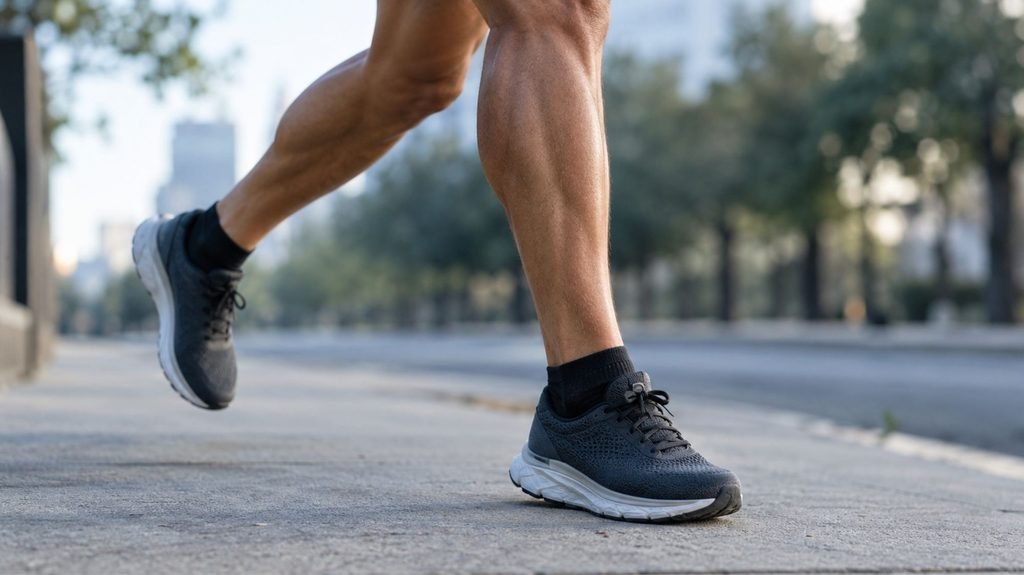
Shin splints, medically known as medial tibial stress syndrome, are pain along the shinbone caused by repetitive stress on the bone and the connective tissue that attaches muscle to it. The increased activity overworks the muscles, tendons, and bone tissue faster than they can adapt.
A few things to know in plain terms:
- The pain is typically felt along the inner edge of the shin, in the lower half of the leg, above the ankle.
- It often starts as soreness that fades once a run ends, and can progress to pain that’s present from the start of a run if ignored.
- It’s different from general muscle soreness, which tends to be spread across a muscle group and eases within a day or two rather than returning with every run.
- It’s especially common among new or returning runners, since this is exactly the group most likely to increase training load faster than their shinbone can adapt.
For a broader look at the injuries that tend to affect new runners, see the guide to common running injuries for beginners.
What causes shin splints in new runners?
Shin splints usually develop when running volume, intensity, or surface changes faster than the shinbone and surrounding tissue can adapt. A few patterns show up often:
- Sudden increases in weekly mileage or running frequency. Jumping from occasional running to several sessions a week, or adding distance quickly, is one of the most common triggers.
- Running on hard or uneven surfaces without a gradual transition. Switching from a treadmill to concrete sidewalks, for example, changes the impact load on the shin.
- Worn out or poorly fitted running shoes. Shoes that no longer cushion properly, or that don’t suit a runner’s foot shape, can add extra stress to the shin with every stride.
- Muscle imbalances or weak hips and calves. When the muscles that stabilize the leg are underdeveloped, the shin can end up absorbing more load than it should.
A quick safety reminder: pain that doesn’t ease with rest deserves a professional assessment rather than more stretching or pushing through it. For guidance on building up running frequency without overloading the shins, see how often beginners should run.
How do you tell shin splints apart from a stress fracture?
Shin splints tend to cause a dull, spread out ache along the shin that eases with rest, while a stress fracture tends to cause sharp, localized pain that can occur even while walking.
| Sign | Shin splints | Possible stress fracture |
| Location | Spread along the inner shin | One specific, localized spot |
| Pain timing | During and right after exercise | May also occur while walking or at rest |
| Pattern | Eases with rest | May persist or worsen over days |
| Swelling | Mild, if any | May be more noticeable |
| What to do | Rest, ice, gradual return | Seek professional assessment |
This distinction matters because the right response is different in each case. Shin splints usually respond well to rest and a gradual return to running. A possible stress fracture needs a different approach entirely, and continuing to run on one can make things considerably worse. When in doubt, professional assessment, sometimes including imaging, is the safer path than guessing.
How can a beginner help prevent shin splints?
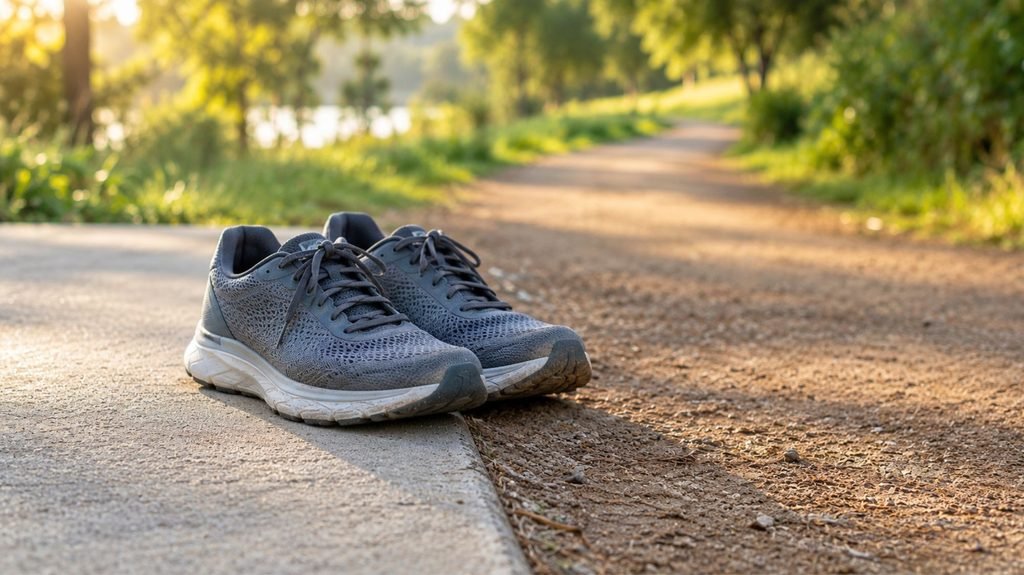
Preventing shin splints mainly comes down to increasing training load gradually and making sure shoes and surfaces aren’t adding unnecessary stress to the shin.
- Progress running volume gradually. Rather than jumping distance or frequency all at once, build up in small, manageable steps and give the shin time to adapt between increases.
- Choose properly fitted running shoes. Shoes suited to your foot type and gait matter more than brand or price. The right fit and appropriate cushioning can help reduce stress on the shins, particularly for runners prone to shin splints.
- Mix surfaces thoughtfully. Moving from a treadmill straight to pavement, or vice versa, changes impact load; easing into a new surface over a few runs is gentler on the shin than switching all at once.
- Build general strength over time. Stronger calves, hips, and core help the leg absorb impact more evenly, which can take some of the repetitive load off the shin itself.
For more on choosing shoes that fit a beginner’s needs, see the best running shoes for beginners guide.
What helps shin splints recover, and what should a beginner avoid?
Most shin splints improve with rest, ice, and a gradual, monitored return to running, while pushing through pain tends to extend recovery time.
What tends to help:
- Resting or significantly reducing running volume as soon as pain appears.
- Icing the area and using over-the-counter pain relief for symptom management, used cautiously and only short term.
- Low-impact cross-training, such as cycling or swimming, as an alternative while the shin heals.
- A gradual, monitored return to running rather than resuming at the previous volume right away.
- General calf, hip, and ankle strengthening once acute pain has settled. A resistance band set can support this kind of strengthening work, since building strength in these areas is associated with reducing the repetitive load that contributes to shin splints. A foam roller can also support general calf recovery between sessions, which may help ease some of the tightness that places extra strain on the shin.
What to avoid:
- Running through sharp or worsening pain.
- Resuming full mileage immediately once symptoms ease, instead of easing back in gradually.
- Ignoring pain that occurs during walking or at rest, not just during running, since this is a sign that deserves professional attention rather than self-care alone.
Recovery timelines vary by person and by severity, and can range from around two weeks for mild cases to two or more months for more persistent ones. There’s no shortcut that reliably speeds this up, so patience during the return to running matters as much as the initial rest period.
A realistic recovery week pattern for mild shin splints
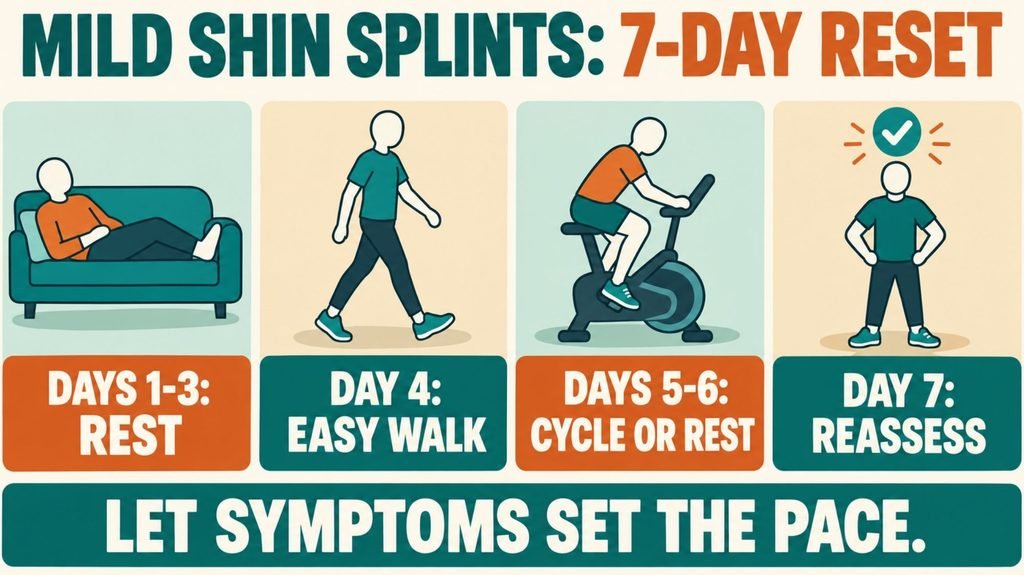
A realistic recovery week trades running volume for rest and low-impact movement while symptoms settle. Written as a pattern rather than a fixed prescription, it might look like this:
| Day | Activity |
| Day 1 to 3 | Rest or low-impact cross-training (cycling, swimming) |
| Day 4 | Short, easy walk, only if pain-free |
| Day 5 to 6 | Continue low-impact cross-training or rest |
| Day 7 | Reassess: if daily activities are pain-free, consider a short, easy run-walk session |
The key marker of progress here is symptoms, not mileage. If shin pain returns during the reintroduced run-walk session, it’s a sign to step back to rest and cross-training rather than pushing forward on schedule.
Managing early shin pain: a quick checklist
- Reduce or pause running as soon as shin pain is noticed.
- Check shoe age and fit against typical mileage guidelines.
- Review recent changes in distance, surface, or frequency.
- Ice the area and rest for several days before attempting to run again.
- Note whether pain occurs while walking, not just while running.
In short
Shin splints are one of the most common overuse injuries among new runners, and in most cases they trace back to the same root cause as other early running injuries: too much load, too soon, for tissue that hasn’t adapted yet. Scaling back at the first sign of pain, choosing properly fitted shoes, progressing training load gradually, and building general strength all work together to reduce the chances of shin splints returning. The one distinction worth remembering above all else is the difference between an ache that eases with rest and pain that persists or shows up during walking. The first usually responds to self-care. The second is a signal to get a professional opinion before continuing to train.
If you’re looking to build your running routine without repeatedly dealing with preventable setbacks, explore No Injury Running for more guidance on running safely and staying consistent.
Frequently Asked Questions
A dull, spread out ache or tenderness along the inner edge of the shinbone, often starting after a run and, if ignored, eventually present from the beginning of a run as well.
Recovery time varies, but it’s often somewhere between about two weeks and two or more months depending on severity and how closely rest and a gradual return to running are followed.
It’s generally better to scale back or pause running as soon as shin pain appears rather than running through it, since continuing to train on sore shins tends to extend recovery time.
Properly fitted shoes suited to foot type and gait are commonly associated with reduced shin stress, though they’re one factor among several, including training load and surface.
Shin splints tend to cause a spread out ache that eases with rest, while a stress fracture tends to cause sharp, localized pain that can also occur while walking or at rest. A professional assessment is the safest way to tell the two apart.
This article is educational and is not medical advice. It does not diagnose or treat any condition. Stop running and seek prompt medical care for sudden severe pain, visible swelling, numbness or tingling, pain following a fall or twist, or any pain that persists or worsens despite rest.